What the ECGT directive means for sustainability claims in sales & marketing
ECGT regulations for sales and marketing
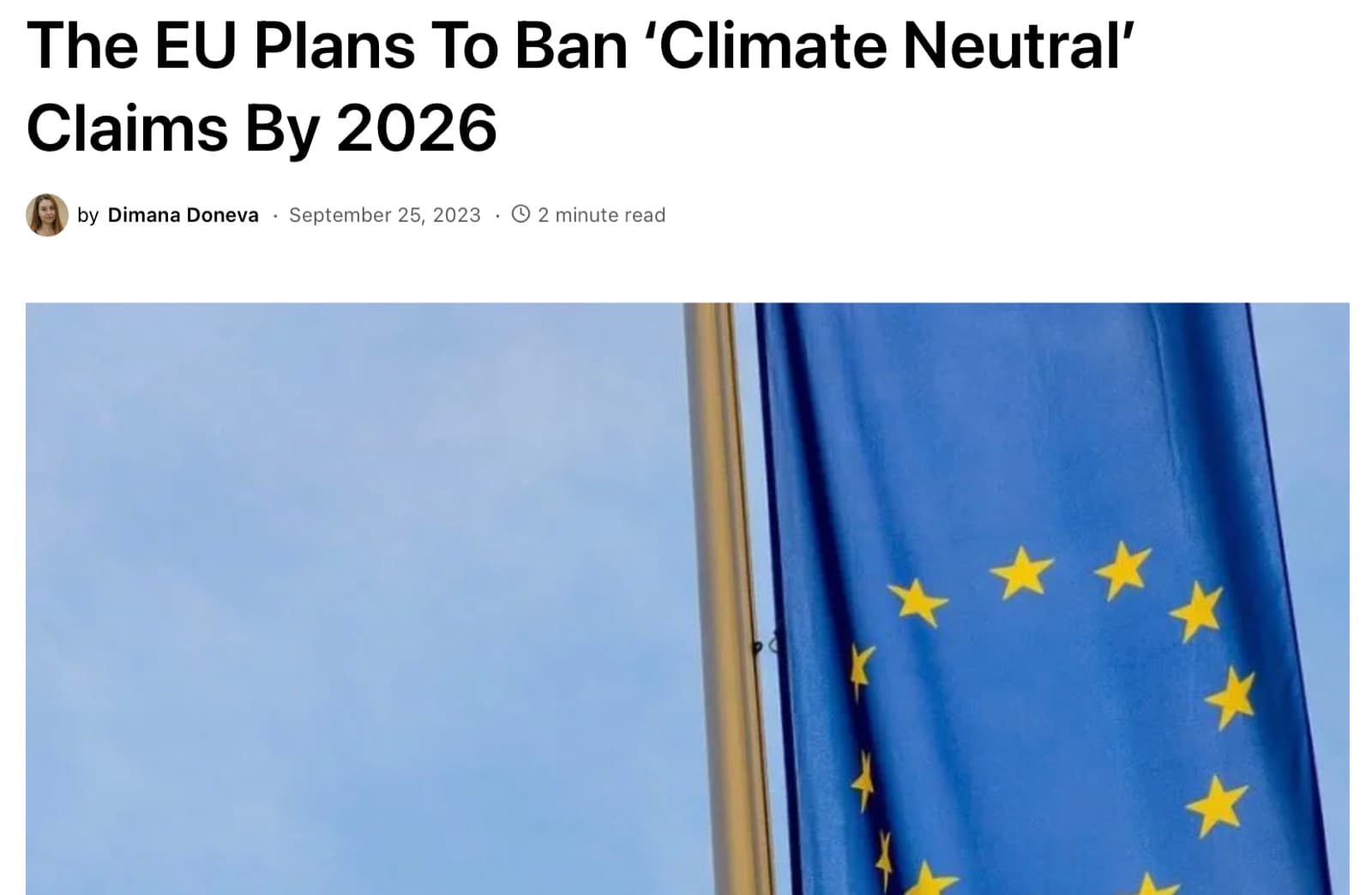
Empowering Consumers for the Green Transition (ECGT) Directive?
The Empowering Consumers for the Green Transition (ECGT) Directive is a new EU directive designed to improve the reliability and transparency of environmental claims and sustainability labels thereby protecting consumers from greenwashing. Companies will therefore need to substantiate environmental claims with clear, verifiable evidence before communicating them to consumers. Unsubstantiated claims such as “green” and using solely carbon offsetting as stating your product is “carbon neutral" will no longer be allowed on labels. The directive aims to reduce greenwashing by raising the standard for environmental marketing though will also require credible proof of sustainability efforts from others who simply are missing this data, posing a challenge for many.
What sustainability claims are no longer allowed?
- Generic environmental claims such as "eco-friendly", "green", or "climate positive" without supporting evidence.
- Claims that a product is "carbon neutral" solely because of carbon offsetting.
- Claims suggesting an entire business is sustainable based on one environmental initiative.
- Presenting compliance with legal requirements as though it were a unique environmental benefit.
The ECGT comes into effect September 2026 for all EU member states which calls for quick action though the transition period in place until January 2027 gives a buffer zone for our communications strategies and sustainability assessments efforts to adjust.
Why is the ECGT Directive important for businesses?
Firstly, compliance helps reduce the risk of enforcement actions, financial penalties, reputational damage, and disruptions caused by misleading environmental claims. Substantiated sustainability claims are not only important for regulatory compliance and maintaining stakeholder relations but also formaintaining consumers as sustainability is increasingly important to them with up to 80% willing to pay more for sustainably sourced products. Resultantly, the companies with clear sustainability claims will gain a competitive edge in the market.
Companies with transparent sustainability data gain a competitive advantage over businesses that cannot substantiate their environmental claims. Without reliable supply chain data, many organizations may need to limit or reconsider the environmental claims they communicate. Having the knowledge of your greenhouse gas emission and working with accredited standard setting organizations for your emissions reduction aims will now become even more powerful.
What to do to keep sustainability communication intact?
- The Data: Use the GHG Protocol to map out your genuine value-chain emissions. Using credible carbon accounting will enable you to back up your claims about carbon emissions and achieve reductions, directly supporting your B2B retail sourcing partnerships.
- The Future: Planning to advertise long-term sustainability goals? Ground them in approved Science Based Targets (SBTi) to meet the directive's demand for independent monitoring and clear milestones.
- Supplier engagement: Check on environmental claims of your upstream suppliers. Verify the claims internally before it makes it into consumer facing communication.
As we can see, sustainability communication becomes increasingly evidence-driven and that is where Unibloom provides the required specific and scientific validated data for accountability and turns environmental data into a competitive advantage. The solution develops and connects carbon, cost, and impact information in one shared view, enabling teams to verify sustainability claims and communicate progress with confidence. The result is maintaining and building trust with customers, partners, and stakeholders.