Scope 3 Emissions Database — Country-Specific Climate, Cost & Nutrition Data for Food & Fashion

Smarter decisions? Start with better data beyond average.

Ditch incomplete climate & cost databases and guesswork. Unibloom gives you country-specific emission, land-use, deforestation (FLAG), cost, and nutrition data in real time & one place, to make climate and business decisions that actually stick.

Brnad LogoBrnad LogoBrnad LogoBrnad Logo
Book Demo

Incomplete climate data is blocking smarter procurement and innovation.

Averaged databases and datagaps internally miss key cost, carbon & climate, and nutrition signals—leading to missed savings, slower product development, and off-target Scope 3 strategies or supplier choices.

Country-specific Scope 3, FLAG, land-use, cost, and nutrition data — in one place

Data is fragmented in PDFs, emails, LCA spreadsheets and highly average on regions.

Supplier data takes too long or never arrives.

Financial impact is unclear, making buy-in difficult

Why country-specific data beats industry averages for Scope 3 decisions

Most climate data & databases are complex & not enough for confident decision making in new solutions.

Procurement & innovation rely on global or regional averages, miss key cost and nutrition data, and the databases are not designed for real business decision-making. If you’ve ever tried to compare decarbonisation projects across products, countries, or suppliers, you’ve likely hit a wall of assumptions, missing context, or spreadsheet overload.

Unibloom changes that.

We combine the most robust climate data sources with country-specific, cost, and nutritional insights—so you can model, compare, and prioritise initiatives across Scope 1, 2 & 3 with confidence. All aligned with the GHG & EF 3.1-compliant LCA models (EU standard) built on trusted sources like Ecoinvent and Agri-footprint.

Save time

Avoid back and forth trying to compare climate solutions and investments. Project and predict switching scenarios based on data, instantly.

Place good bets

Climate investments and initiatives are ramping up with CSRD and other regulations. Don’t leave regulatory compliance to chance.

Gain confidence

Prove to the board, investors, stakeholders and external agencies that you are on track and ahead of targets.

How Scandi Standard makes climate decisions using Unibloom

Ida Ljungvist, Sustainability Director


“Unibloom’s platform will help us support the transparency we aim for with our customers, leadship & investors related to decarbonisation and provide the overview that we are lacking today”

Works with SAP, carbon accounting systems, and your existing procurement tools

Hit SBTI & FLAG targets

Make better investments at the right time

Speed up insights

Increase team alignment

Be efficient in collaboration

Gain trust with sustainable products

Free data validation with our LCA & data expert team

In just 55 minutes, we help sustainability & procurement teams to gain  clarity on  data accuracy currently available from suppliers and in the company and current gaps and improvements.

Frequently asked questions about Scope 3 emissions data
What is a Scope 3 emissions database?
A Scope 3 emissions database provides emission factors for indirect supply chain activities — covering purchased goods, ingredients, packaging, transport, and land use.

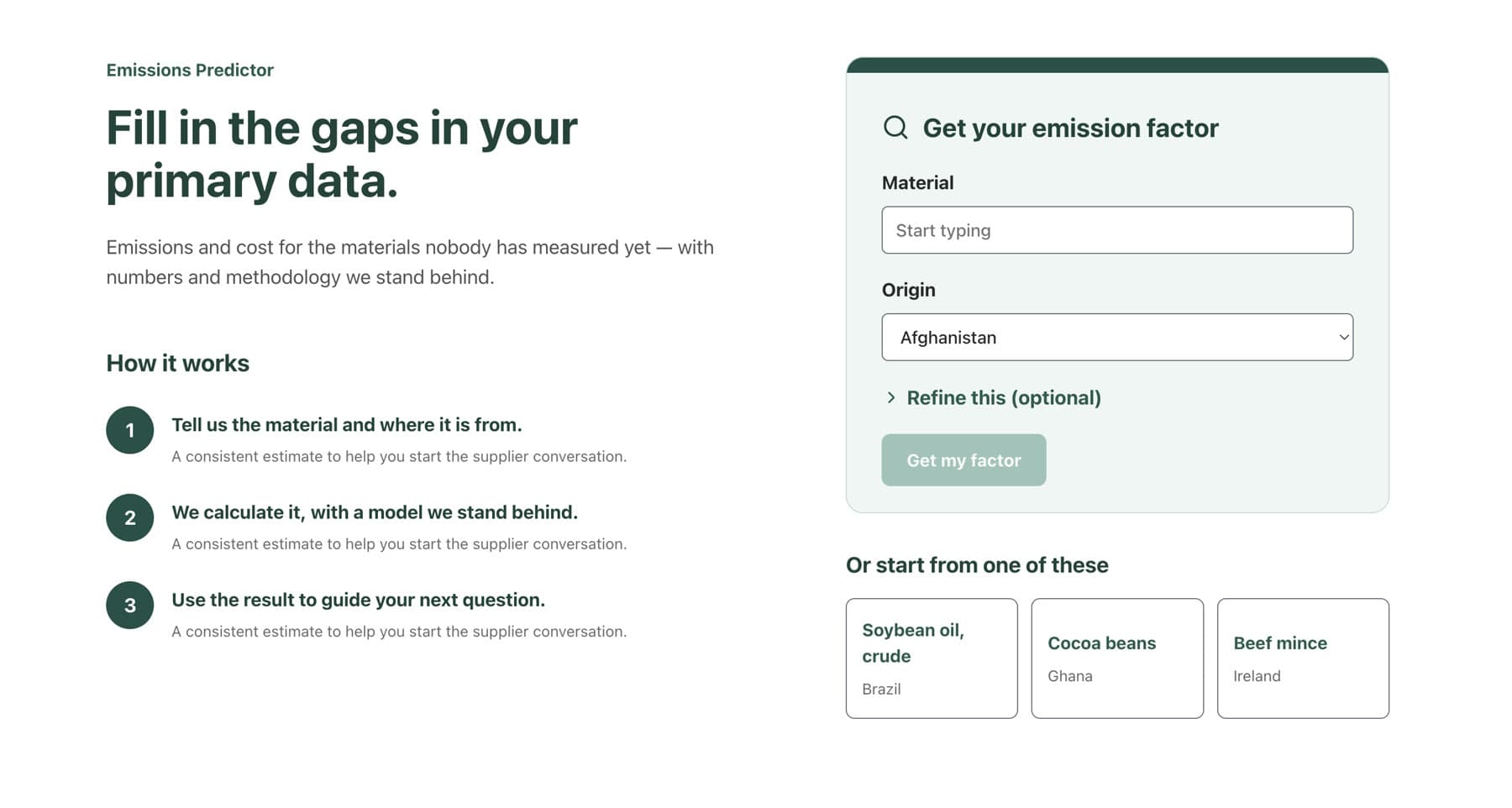
Unibloom's database goes beyond industry averages with country-specific emission factors for 20,000+ materials, so decisions are based on where something is actually grown, processed, or sourced.
What makes Unibloom's data different from standard LCA databases?
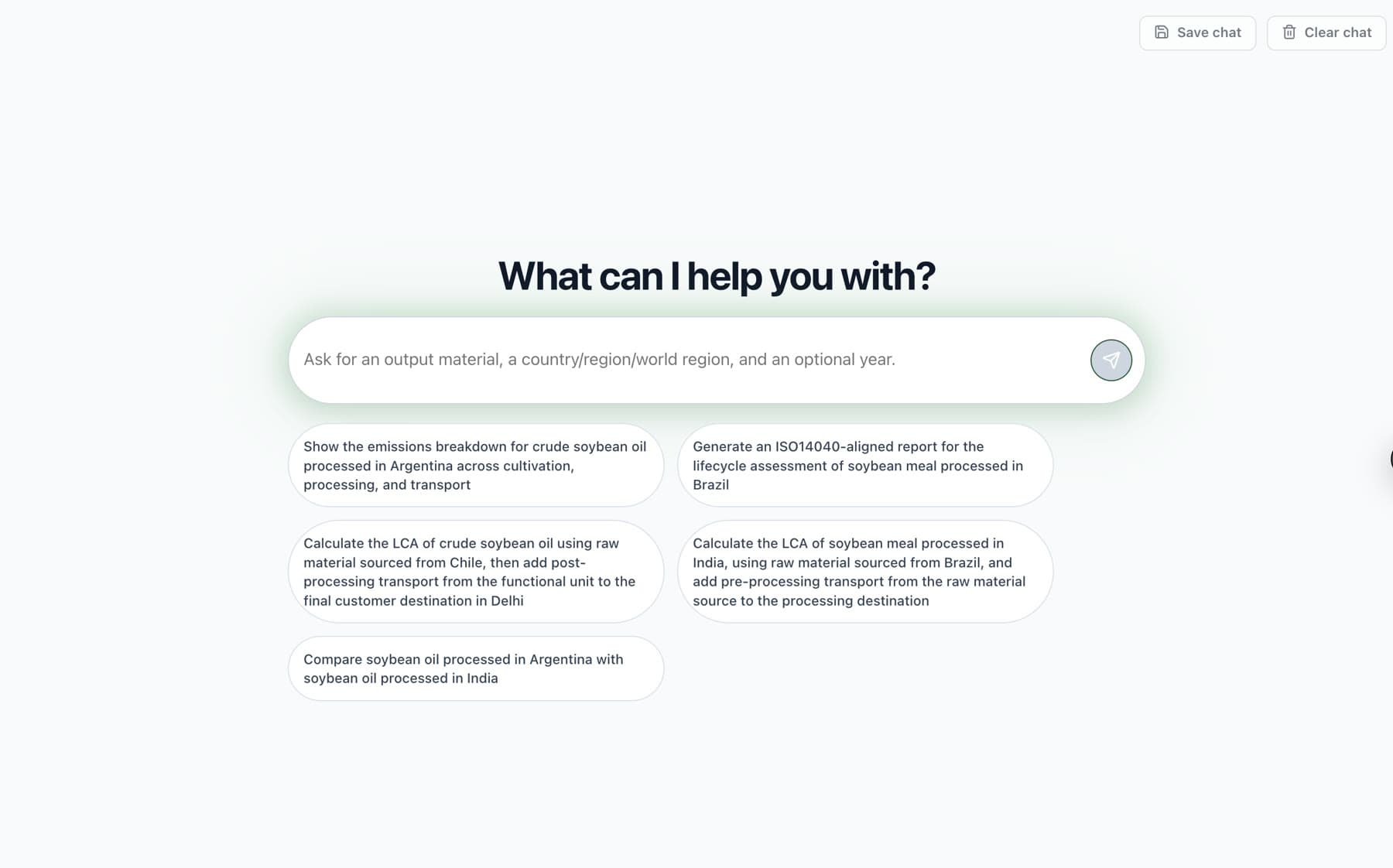
Most LCA databases provide global or regional averages. Unibloom provides country-specific emission factors — so switching from Brazilian soy to European soy shows a real, defensible emissions difference, not an estimate.

Data also includes cost, FLAG, land-use, deforestation risk, and nutrition — all in one place.
What data types does Unibloom cover?
Unibloom's databases cover Scope 3 emission factors, FLAG and land-use data, deforestation risk, real market cost data, and nutritional values — across food ingredients, packaging, plastics, metals, textiles, and transport modes.
Is Unibloom's data aligned with GHG Protocol, SBTi FLAG, and CSRD?
Yes. All data is aligned with GHG Protocol standards, SBTi FLAG guidance, and CSRD reporting requirements — so your climate decisions and compliance reporting come from a single verified source.
Can Unibloom's data integrate with SAP or existing carbon accounting tools?
Yes. Unibloom integrates directly with SAP and connects to existing carbon accounting platforms — so your procurement workflows stay intact while gaining access to more granular, verified emissions data.