How Fertiliser Shocks and Shipping Disruptions Are Driving Food Price Inflation — And What Procurement Can Do

Fertiliser shocks, shipping disruptions and food prices: Why decision speed matters for agriculture and procurement more than ever
The Gulf shipping crisis highlights how fertilizer dependency, yields and supply chains are deeply interconnected — and why food companies must rethink how they make procurement decisions.
How the Strait of Hormuz shipping crisis is threatening global food prices
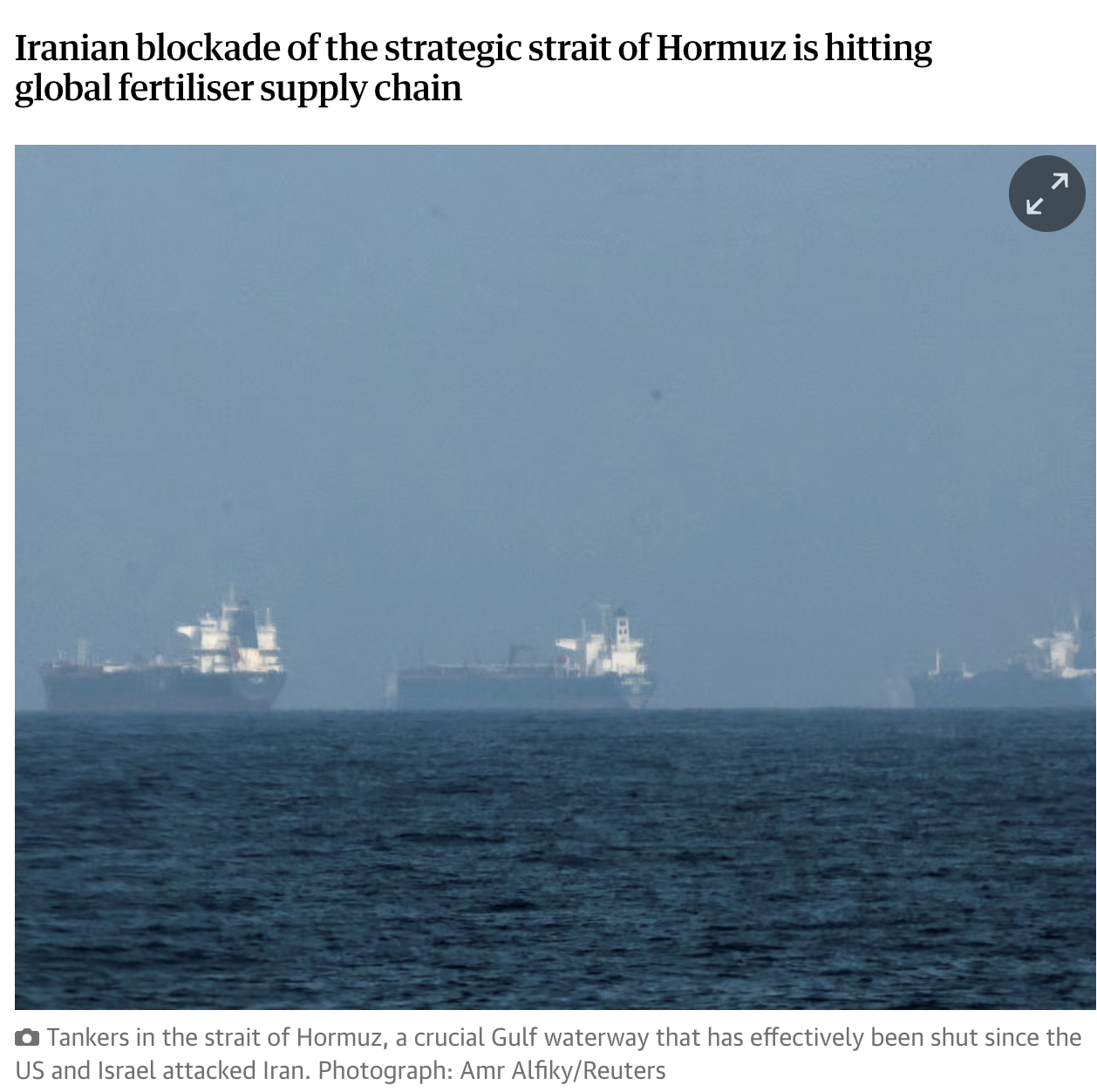
The current disruption in shipping through the Strait of Hormuz is more than a geopolitical event. It is a warning signal for the global food system. A large share of the world’s energy and fertiliser inputs passes through this narrow shipping corridor. When traffic is disrupted, the ripple effects can reach farmers, food producers and ultimately consumers. The Guardian recently reported that the situation could trigger another global food price shock, as fertiliser supply becomes constrained and production costs rise.
The reason this matters so much is simple. Modern agriculture runs on nitrogen.
Why 50% of global food production depends on synthetic nitrogen fertilisers
Roughly half of global food production depends on synthetic nitrogen fertilisers produced through the Haber-Bosch process. Producing these fertilisers requires large amounts of natural gas, which can represent 60–80% of production costs.
This means fertiliser prices are extremely sensitive to:
• energy markets
• geopolitical conflicts
• shipping disruptions.
When these factors collide, fertiliser costs spike quickly.
How fertiliser price spikes translate directly into crop yield reductions
Fertiliser shocks do not just affect prices. They also affect yields. Nitrogen fertilisers are one of the most important drivers of crop productivity. If farmers reduce fertiliser use because of high costs, yields often fall significantly. Studies suggest yield reductions of 20–40% in cereals when nitrogen inputs are heavily reduced.
This creates a dangerous cycle:
Higher fertiliser costs → lower application rates → reduced yields → higher food prices. In other words, fertiliser volatility can translate directly into global food inflation.
The food-energy-freight shock: when three supply chain risks collide at once
What makes the current situation particularly risky is that three systems are under pressure at the same time.
- Energy markets
- Shipping routes
- Agricultural inputs
Analysts increasingly refer to this dynamic as a food-energy-freight shock. When all three factors move together, food prices can spike rapidly.
We have seen this before. During the 2022 fertilizer crisis following Russia’s invasion of Ukraine, fertilizer prices more than doubled in some markets, significantly impacting global food costs.
Alternatives to synthetic nitrogen fertilisers — from biofertilisers to green ammonia
The good news is that alternatives are emerging. Several technologies and practices can reduce dependence on synthetic nitrogen fertilisers.
Biological nitrogen fixation
Microorganisms such as Rhizobium and Azospirillum can convert atmospheric nitrogen into plant nutrients. These biological fertilisers can reduce the need for synthetic nitrogen inputs.
Biofertilisers and algae-based systems
Research into microalgae fertilisers shows they can deliver nitrogen to crops while lowering emissions and potentially improving soil health.
Green ammonia
A new generation of fertiliser production is emerging using renewable electricity rather than fossil gas. This technology, known as green ammonia, could decentralise fertiliser production and reduce geopolitical supply risks.
Why procurement teams can't afford slow decisions in volatile supply chains
The challenge for companies is not just technology. It is decision speed.
Procurement and sustainability teams need to evaluate:
• new ingredients
• supplier diversification
• fertilizer alternatives
• cost impacts
• carbon implications.
Today those decisions can take weeks or months of analysis. But supply chain shocks now happen in days.
How food companies are using scenario modelling to respond to supply chain shocks faster
This is where simulation and decision intelligence tools become critical.
At Unibloom, we are offering an integrated data & AI-driven decision analysis that help companies quickly evaluate:
• alternative ingredients or feed sources
• supplier diversification strategies
• cost and margin implications
• carbon impact
• supply chain resilience.
Instead of months of analysis, teams can test scenarios in minutes. In a world of geopolitical volatility, the ability to adapt quickly may become one of the most important competitive advantages in food and agriculture.
Building a more resilient food system
The Gulf shipping crisis highlights a broader transformation underway.
The future food system must become:
• more resilient
• more regionalized
• less dependent on volatile inputs
• more data-driven.
Companies that can model supply chain decisions quickly will be far better positioned to navigate future shocks. And increasingly, those capabilities will depend on better data and smarter decision tools.
How Unibloom helps procurement teams respond to supply chain shocks?
When fertiliser prices spike or shipping routes are disrupted, procurement teams need to model alternative ingredients, new sourcing locations, and cost impacts — fast. Unibloom's USwitch tool lets teams compare alternative ingredients by Scope 3 emissions, cost per kg, and supplier availability in minutes, not weeks. Try UnibloomSwitch free →
See how Unibloom helps companies hit SBTi targets while managing supply chain volatility — learn more →
Contact: anna.sandgren@unibloom.world for a introduction call to help you diversify and reduce your supply chain risk today.